CURRENT AFFAIRS | 25 APRIL 2026
CLAT GK + Polity & Constitutional Law
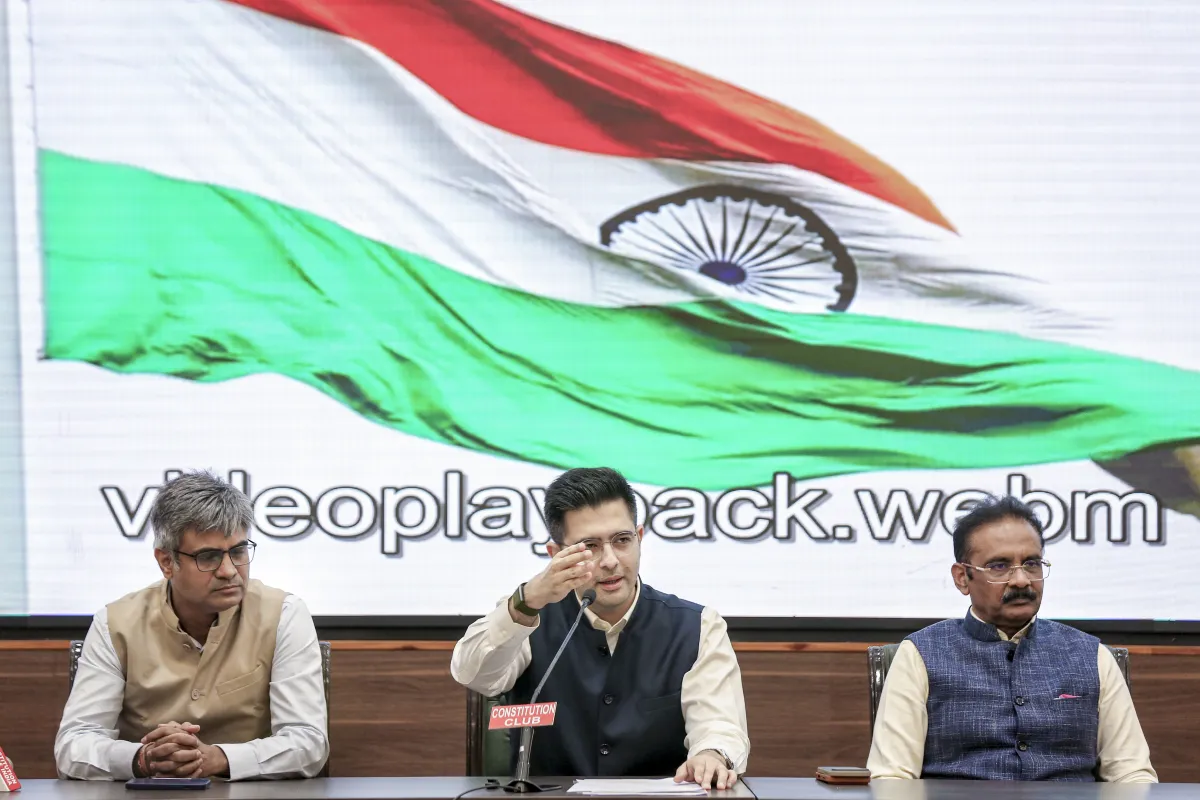
In one of the largest co-ordinated defections the Rajya Sabha has seen in recent decades, seven of AAP’s nine Upper House MPs — Raghav Chadha, Sandeep Pathak, Ashok Mittal, Harbhajan Singh, Vikramjit Sahney, Swati Maliwal and Rajinder Gupta — formally quit the Aam Aadmi Party on 24 April 2026 and announced their merger with the BJP. AAP has petitioned the Rajya Sabha Chairman seeking their disqualification, but the seven MPs claim immunity under Paragraph 4 of the Tenth Schedule because they comprise more than two-thirds of AAP’s Rajya Sabha legislature party. The episode is a textbook Govt. Exams 2026-27 case study on the anti-defection law, the 91st Amendment, Kihoto Hollohan and the limits of judicial review.
Constitutional / Legal Framework
- Tenth Schedule — inserted by the 52nd Constitutional Amendment Act, 1985; lays down grounds for disqualification of legislators on ground of defection.
- Paragraph 2 — disqualification on (a) voluntarily giving up membership of original party; (b) voting/abstaining contrary to whip without prior permission.
- Paragraph 4 (‘merger’ exemption) — no disqualification if the original party ‘merges’ with another and not less than two-thirds of the legislature party agree to the merger.
- 91st Constitutional Amendment Act, 2003 — deleted Paragraph 3 (the old ‘split’ exception based on one-third), retained only the two-thirds merger exception; also capped Council of Ministers at 15% of House strength (Articles 75(1A) and 164(1A)).
- Paragraph 6 — disqualification questions decided by the Chairman (Rajya Sabha) or Speaker (Lok Sabha); their decision is final subject to judicial review.
- Kihoto Hollohan v. Zachillhu (1992) — Constitution Bench held the presiding officer acts as a tribunal; struck down Paragraph 7 (court-ouster clause) for want of state ratification under proviso to Article 368(2); recognised judicial review on grounds of mala fides, perversity and constitutional violations.
Why This Matters for Govt. Exams 2026-27
Anti-defection has been a CLAT and AILET staple every cycle since 2018. Expect a passage with the AAP-BJP merger facts asking you to apply Paragraph 4’s two-thirds threshold (7/9 = 77.7%, comfortably over 2/3rd), distinguish ‘merger’ from ‘split’ (Kihoto, post-91st Amendment), identify the Rajya Sabha Chairman as the deciding authority under Paragraph 6, and recognise Kihoto’s limited judicial review. Doctrine to master: representative democracy + party discipline vs freedom of speech under Article 105 — Kihoto upheld the Schedule as a balance.
Key Facts at a Glance
| Event | 7 of 9 AAP RS MPs quit AAP, merge with BJP |
| Date | 24 April 2026, New Delhi (Constitution Club presser) |
| MPs | Raghav Chadha, Sandeep Pathak, Ashok Mittal, Harbhajan Singh, Vikramjit Sahney, Swati Maliwal, Rajinder Gupta |
| Fraction | 7/9 = 77.7% (more than 2/3rd) |
| Constitutional anchor | 10th Schedule, Paragraph 4 (merger exemption) |
| Originating Amendment | 52nd CAA 1985 (introduced); 91st CAA 2003 (deleted split) |
| Deciding authority (RS) | Rajya Sabha Chairman (Vice-President of India) |
| Leading case | Kihoto Hollohan v. Zachillhu, AIR 1993 SC 412 (decided 1992) |
| Judicial review | Available on mala fides, perversity, constitutional violation; not on merits |
| Ouster clause | Paragraph 7 — struck down in Kihoto |
Mnemonic / Memory Hook
“52-91-KIHOTO” — 52nd Amendment introduced the 10th Schedule (1985), 91st Amendment killed the split + capped ministers (2003), KIHOTO Hollohan made Paragraph 7 unconstitutional and opened limited judicial review (1992). For the merger arithmetic remember “2/3 to be FREE” — two-thirds is the magic number to escape disqualification.
Test Yourself — 10 MCQs
Practice Quiz — 10 CLAT-Style Questions
Click an option to reveal the answer and explanation.