CURRENT AFFAIRS | MARCH 23, 2026 | CLAT GK + INTERNATIONAL RELATIONS
An Indian Express Ideas analysis captures India-China relations as a paradox of the 21st century: China is simultaneously India’s largest import partner (bilateral trade: ~$118 billion FY2024, deficit: ~$85 billion) and India’s most significant security adversary — with an unresolved 3,488 km border dispute, a bloody clash at Galwan Valley in 2020, and ongoing standoffs at the Line of Actual Control. How India navigates this paradox defines its strategic future.
Why Govt. Exams 2026-27 Aspirants Must Know This
India-China relations is a perennial CLAT GK topic — tested every year. Key areas: Galwan clash (2020), Line of Actual Control, BRICS membership, PLI scheme (reducing import dependence), WTO’s MFN principle, and Panchsheel (1954). CLAT passages on international affairs increasingly feature India-China geopolitics alongside legal frameworks like UNCLOS and WTO rules.
Key Facts at a Glance
- India-China bilateral trade: ~$118 billion in FY2024 — China is India’s largest import source
- India’s trade deficit with China: ~$85 billion — India imports far more than it exports
- India imports from China: electronics, machinery, APIs (pharma raw materials), chemicals, solar panels
- Line of Actual Control (LAC): ~3,488 km — three sectors: Western (Ladakh), Middle (HP/Uttarakhand), Eastern (Arunachal/Sikkim)
- Galwan Valley clash (June 15-16, 2020): 20 Indian soldiers killed; China’s casualties undisclosed
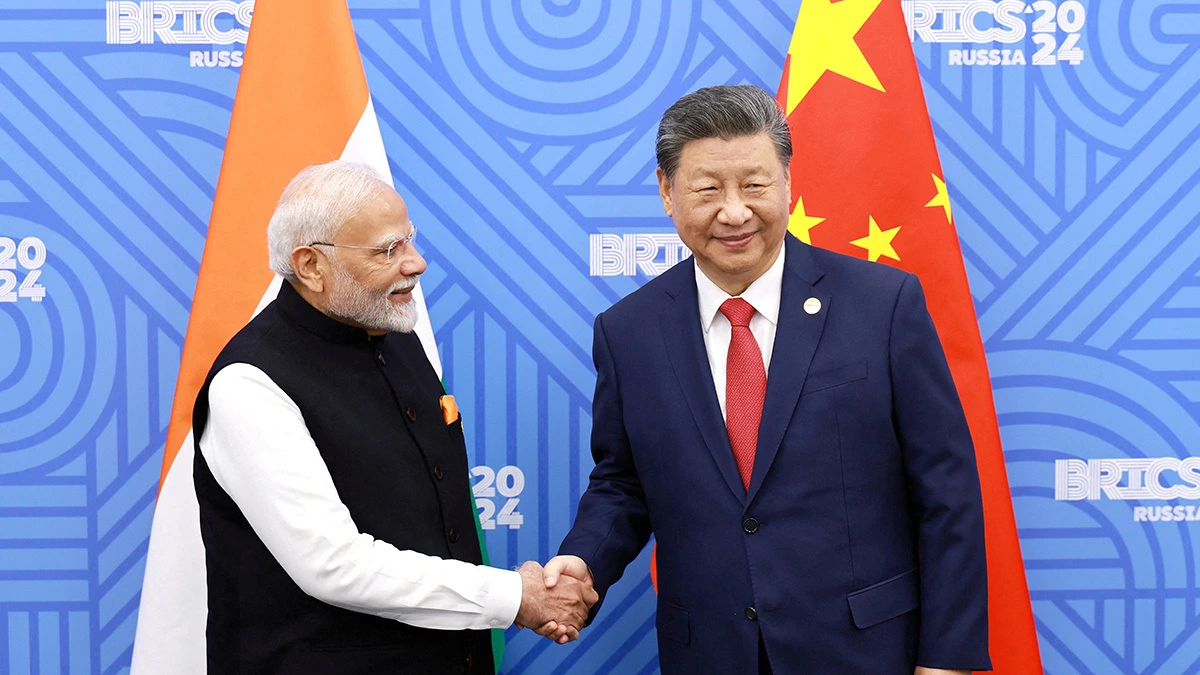
- Both nations are BRICS members; India is also in QUAD (which excludes China)
- China claims Arunachal Pradesh as “Zangnan” (South Tibet)
- India’s PLI (Production Linked Incentive) scheme targets electronics and other sectors where India is dependent on Chinese imports
- Post-Galwan: India banned 300+ Chinese apps including TikTok, WeChat, CamScanner
- Disengagement at Depsang and Demchok completed in October 2024
Key Terms and Definitions
| Term | Definition |
|---|---|
| LAC | Line of Actual Control — the de facto border between India and China (~3,488 km); not a formally demarcated international border |
| BRICS | Grouping of Brazil, Russia, India, China, South Africa (later expanded); represents major emerging economies; India and China are founding members |
| PLI Scheme | Production Linked Incentive — GoI scheme offering financial incentives to companies to build domestic manufacturing and reduce import dependence |
| Most Favoured Nation (MFN) | WTO principle (GATT Article I) — a country must give all WTO members the same trade advantages it gives to any one member |
| Panchsheel | Five Principles of Peaceful Coexistence — first codified in the 1954 Sino-Indian Tibet Agreement; foundation of India-China relations before 1962 war |
Constitutional and Legal Framework
- Article 51 (DPSP): India’s constitutional commitment to international peace, respect for international law, and settlement of disputes by arbitration
- WTO/GATT MFN Principle: Both India and China are WTO members — trade disputes between them are subject to WTO dispute settlement
- Ministry of Commerce (DPIIT/DGFT): Nodal ministry for trade policy, WTO negotiations, import/export regulation
- QUAD: Quadrilateral Security Dialogue — India, US, Japan, Australia — seen as a counterbalance to China; China excluded
- SCO (Shanghai Cooperation Organisation): Both India and China are members — India joined in 2017
Quick Takeaways for Govt. Exams 2026-27
- LAC = 3,488 km; 3 sectors; NOT a demarcated border; de facto boundary
- Galwan (June 2020) = 20 Indian soldiers killed; worst clash since 1967
- India-China trade = $118 billion; deficit = ~$85 billion against India
- China calls Arunachal Pradesh “Zangnan” (South Tibet)
- BRICS = Brazil, Russia, India, China, South Africa; India in QUAD (excludes China)
- PLI scheme = domestic manufacturing incentive to reduce China import dependence
- MFN principle (WTO) = equal treatment for all WTO members in trade
Practice Quiz — 10 CLAT-Style Questions
Click an option to reveal the answer and explanation.