CURRENT AFFAIRS | 25 APRIL 2026
CLAT GK + Environmental Law & International Conventions
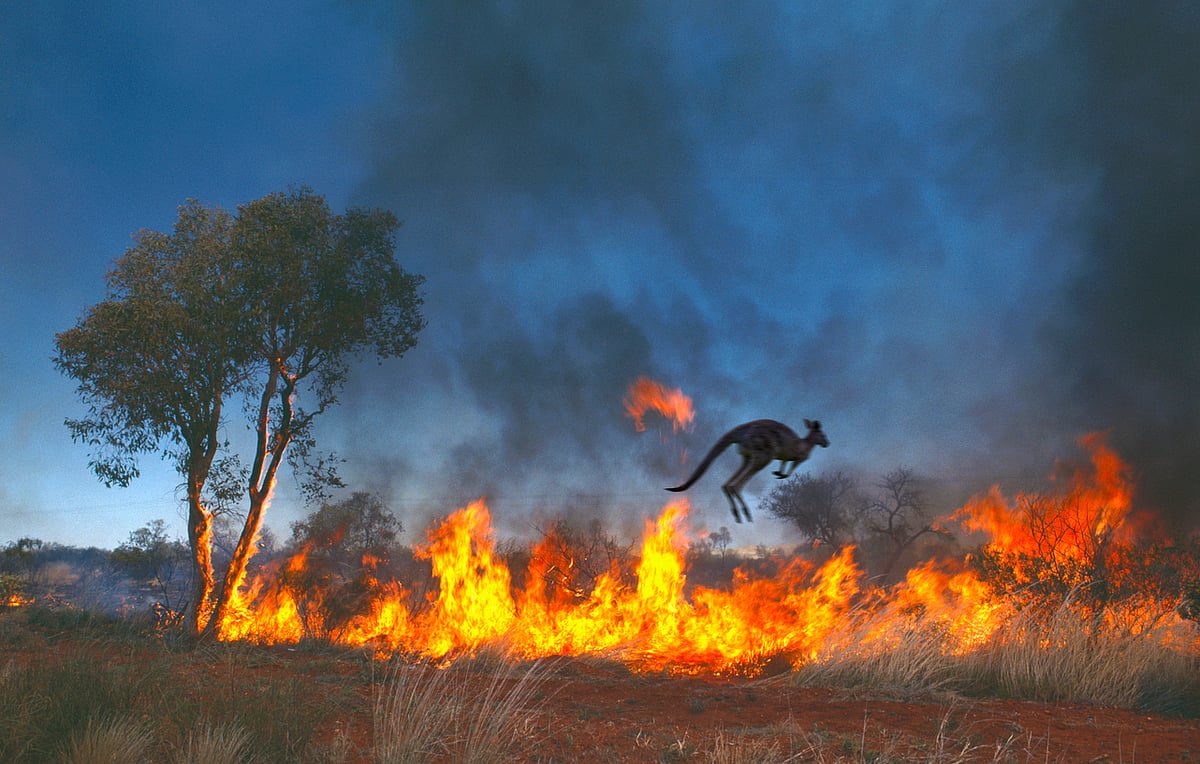
A new study published this week in Nature Ecology & Evolution, led by Stefanie Heinicke at the Potsdam Institute for Climate Impact Research (PIK), projects that under medium-to-high emissions trajectories, 36% of currently occupied terrestrial vertebrate habitats will be exposed to multiple extreme climate events — heatwaves, wildfires, droughts and floods — by 2085. The study covers 33,936 vertebrate species across 794 ecoregions and finds that by 2050 alone, 74% of habitats will face heatwaves. The 2019-20 Australian bushfires killed an estimated 72,000 flying foxes; the 2020 Pantanal fires killed 17 million vertebrates. For Govt. Exams 2026-27 aspirants, this is a perfect peg for environmental constitutionalism — Articles 48A, 51A(g), 21 — and the CBD-Paris-Ramsar architecture.
Constitutional / Legal Framework
- Article 48A (DPSP) — State to protect and improve the environment and safeguard forests and wildlife (inserted by 42nd Amendment, 1976).
- Article 51A(g) (Fundamental Duty) — duty of every citizen to protect environment, forests, lakes, rivers and wildlife.
- Article 21 + M C Mehta line — right to a clean and healthy environment read into the right to life; key cases: Subhash Kumar v. State of Bihar (1991), M C Mehta (Oleum gas, Taj Trapezium, vehicular pollution).
- Environment (Protection) Act, 1986 — umbrella statute enacted in the wake of the 1984 Bhopal Gas Tragedy.
- Wild Life (Protection) Act, 1972 + Forest (Conservation) Act, 1980 — domestic biodiversity protection.
- Convention on Biological Diversity (CBD), 1992 — adopted at Rio Earth Summit; India ratified in 1994; Biological Diversity Act 2002 implements it domestically.
- Paris Agreement (2015), Article 2 — limit warming to “well below 2 deg C” and pursue 1.5 deg C above pre-industrial levels.
- India’s NDCs — 45% emissions intensity reduction by 2030 (vs 2005); ~50% non-fossil installed power by 2030; net-zero by 2070.
- Ramsar Convention (1971) — wetlands of international importance; India has 80+ Ramsar sites.
- IPCC AR6 — synthesis report (2023) underpinning the Heinicke study’s emissions scenarios.
Why This Matters for Govt. Exams 2026-27
Environmental law sits across CLAT GK, Legal Reasoning and the new Quantitative Comprehension passages (climate stats fit perfectly). Expect a passage with the 36%/74%/33,936/794 numbers asking you to apply Article 48A or Article 21 (M C Mehta line) to a hypothetical wildlife habitat. AILET typically tests CBD/Paris/Ramsar overlaps — memorise which convention deals with which subject (CBD = biodiversity, Paris = emissions/temperature, Ramsar = wetlands, CITES = trade in endangered species, UNFCCC = parent climate framework).
Key Facts at a Glance
| Study | “Land vertebrates increasingly exposed to multiple extreme events by 2085” |
| Journal | Nature Ecology & Evolution |
| Lead institution | Potsdam Institute for Climate Impact Research (PIK), Germany |
| Lead author | Stefanie Heinicke (post-doc, PIK) |
| Species covered | 33,936 — amphibians 7,605; birds 10,562; mammals 5,476; reptiles 10,293 |
| Ecoregions | 794 |
| 2085 projection | 36% habitats face multiple extreme events |
| 2050 projection | 74% habitats exposed to heatwaves |
| Mitigation potential | Limit exposure to 9% with rapid emissions cuts |
| Cited disasters | 2019-20 Australia bushfires (72,000 flying foxes); 2020 Pantanal (17 mn vertebrates) |
Mnemonic / Memory Hook
“48A-51A(g)-21” — the constitutional triangle: Directive Principle 48A (State duty), Fundamental Duty 51A(g) (citizen duty), Fundamental Right Article 21 (clean environment via M C Mehta). For conventions remember “Rio-Paris-Ramsar = BCW” — Biodiversity (CBD, Rio 1992), Climate (Paris 2015), Wetlands (Ramsar 1971).
Test Yourself — 10 MCQs
Practice Quiz — 10 CLAT-Style Questions
Click an option to reveal the answer and explanation.